
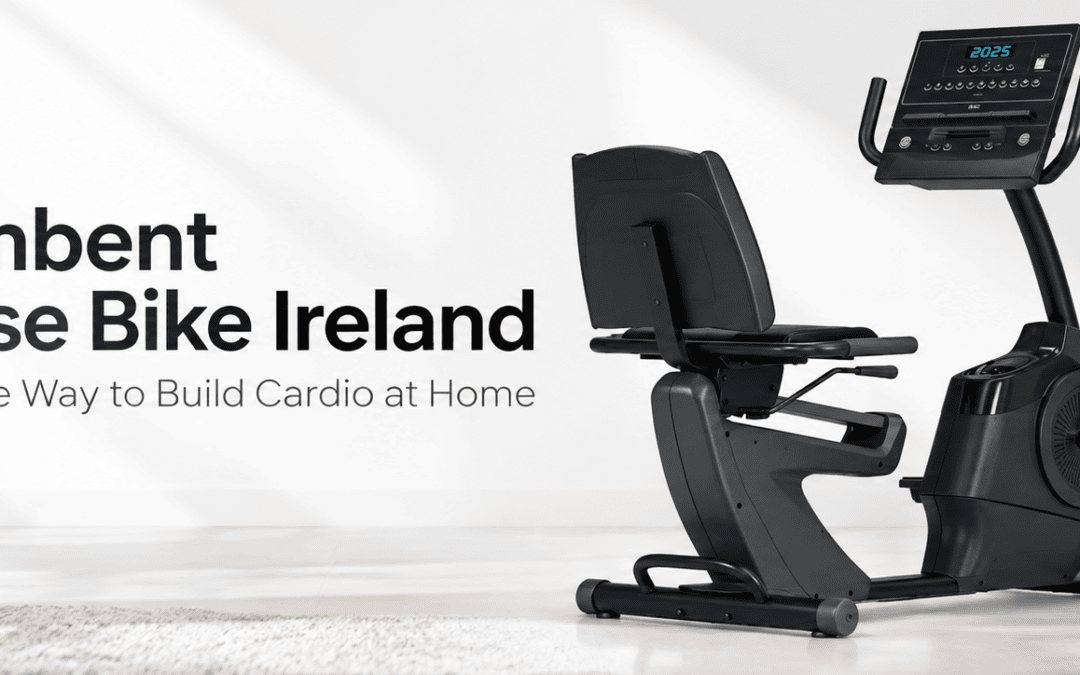
A lot of people want to get fitter at home, but they do not want every workout to feel like a punishment.
That is where a recumbent exercise bike makes sense.
It isn’t the loudest machine in the room. It doesn’t have the aggressive feel of a spin bike, and it won’t ask you to run, jump, or stand for long stretches. For many home users, it is simply one of the most practical cardio machines you can buy.
A recumbent bike puts you in a seated position with your back fully supported and your legs pedalling slightly forward. That simple design tweak changes everything: the ride feels comfortable, stable, and remarkably easy to stick with compared to a standard upright bike or treadmill.
Whether you want low-impact cardio, a reliable routine, weight management, improved stamina, or a gentle way to exercise after a long break, a recumbent bike is a smart choice.
It’s particularly suited to Irish homes, where wet weather, dark winter evenings, and busy family lives can ruin plans for outdoor walking or cycling. When the bike is sitting in your house, getting a workout done is effortless.
The best cardio machine isn’t the hardest one—it’s the one you actually use.
What is a Recumbent Exercise Bike?
A recumbent exercise bike is a stationary bike featuring a wide contoured seat, a supportive backrest, and a relaxed, bucket-seat riding position.
Instead of leaning over handlebars, you sit comfortably into the seat and pedal out in front of you. This cradles your posture and significantly reduces strain on the lower back, hips, and knees.
That doesn’t mean the workout has to be a walk in the park. You can ramp up the magnetic resistance, follow structured training programs, track your metrics, and build a serious sweat. The difference is that your body isn’t fighting joint discomfort while you do it.
Who Should Consider a Recumbent Bike?
Recumbent bikes cater to a wide range of home exercisers:
- Beginners & Re-starters: Ideal if you aren’t ready for high-impact running or intense spin classes and want to build a base safely.
- Active Seniors: Excellent for older adults who require extra lumbar support, lower step-over heights, and high frame stability.
- Joint Care & Rehabilitation: Perfect if you suffer from lower back pain, knee issues, or balance concerns that make standing workouts uncomfortable.
- Busy Parents & Remote Workers: Easily pedal while catching up on TV, listening to podcasts, or taking calls without gasping for air.
Recumbent Bike vs. Other Cardio Equipment
Choosing the right home equipment comes down to how your body interacts with the machine:
| Feature | Recumbent Bike | Upright Bike | Spin Bike | Treadmill |
| Primary Focus | Low-Impact / Comfort | Traditional Cycling | High-Intensity Intervals | Natural Walking/Running |
| Back Support | Full Lumbar Backrest | None (Upright stance) | None (Forward lean) | None |
| Joint Impact | Extremely Low | Low | Low to Medium | Medium to High |
| Seating | Wide, Padded Chair | Standard Bike Saddle | Slim Performance Saddle | Standing / Moving Deck |
| Space Needed | Larger Footprint | Compact | Compact | Large |
Recumbent vs. Spin Bike
Spin bikes are built for aggressive, high-energy sessions with standing climbs and heavy flywheel resistance. Recumbent bikes focus on seated comfort, heart health, and sustainable consistency. Pick the machine you’ll be happy to sit on on a rainy Tuesday evening when motivation is low.
Recumbent vs. Treadmill
Treadmills are fantastic for natural gait training, but they carry constant joint impact with every foot strike. Recumbent bikes remove impact entirely while keeping your heart rate in the ideal cardio zone.
Key Models Comparison: BH XTR vs. NordicTrack GXLE vs. ProForm 325 CSX
If you are looking for a high-quality recumbent bike in Ireland, three stand out for home setups:
| Spec / Feature | BH XTR Recumbent Bike | NordicTrack GXLE | ProForm 325 CSX |
| Resistance System | 24 Levels (Magnetic) | 26 Levels (Silent Magnetic) | 22 Levels (Digital Magnetic) |
| App Connectivity | FTMS (Kinomap, Zwift) | iFIT Bluetooth | iFIT Compatible |
| Frame Access | Open Step-Through | Standard | Standard Step-Through |
| Onboard Programs | 30 Built-in | iFIT Library | 24 Built-in + iFIT |
| Max User Weight | 150 kg | 159 kg | 125 kg |
| Best For | Heavy-duty use & lumbar support | Smooth magnetic ride & iFIT | Compact interactive home workouts |
1. BH XTR Recumbent Bike
The BH XTR is engineered with an emphasis on posture and accessible design. Its low, open-access frame makes stepping on and off effortless—a crucial detail for users with mobility limitations. It features a breathable mesh backrest, side grips with heart rate sensors, 24 magnetic resistance steps, and 30 built-in workout profiles. The open FTMS Bluetooth console lets you sync directly with popular interactive apps like Zwift and Kinomap.
2. NordicTrack GXLE
The NordicTrack GXLE caters to users who want whisper-quiet operation and guided global workouts. It boasts 26 digital levels of Silent Magnetic Resistance (SMR), an extra-wide cushioned seat with lumbar adjustment, and a strong 159kg weight capacity. Integrated iFIT compatibility allows you to stream trainer-led studio classes and scenic outdoor routes.
3. ProForm 325 CSX
The ProForm 325 CSX is a versatile mid-range home bike. It offers 22 digital resistance levels, an easy-to-read 5-inch backlit display, and an adjustable seat rail. It integrates with iFIT via tablet, making it a great option if you want interactive classes without taking up excessive floor space.
4-Week Beginner Recumbent Bike Plan
If you’re starting out, keep the first fortnight manageable. Focus on building the habit first; build intensity later.
Week 1: Establish the Habit
- Frequency: 3 days per week
- Duration: 15–20 minutes per session
- Structure: 5 min easy warm-up
10 min steady pedalling (RPE 4-5/10)
 5 min cool-down.
Week 2: Building Time
- Frequency: 3–4 days per week
- Duration: 20–25 minutes per session
- Structure: 5 min warm-up
12 min steady
2 min slightly higher resistance
5 min cool-down.
Week 3: Introducing Intervals
- Frequency: 4 days per week
- Duration: 25 minutes per session
- Structure: 5 min warm-up
Repeat 5 times: [1 min moderate push / 2 min easy recovery]
5 min cool-down.
Week 4: Sustainable Rhythm
- Frequency: 4 days per week
- Duration: 25–30 minutes per session
- Structure: Alternate between steady 30-minute endurance rides and Week 3 interval workouts.
How to Set Up Your Recumbent Bike Correctly
To prevent knee or hip discomfort, ensure your seat distance is dialed in:
1.Adjust the Seat Distance:Prevent over-extension and knee strain.
Sit with your lower back flat against the backrest. Place the ball of your foot on the pedal at its furthest forward point. Your knee should maintain a slight bend (around 10–15 degrees). If your leg locks out completely, move the seat forward.
2.Secure the Pedal Straps:Ensure proper power transfer.
Tighten the foot straps so your shoes sit snug on the pedals without slipping. You should be able to push and pull smoothly through the pedal stroke.
3.Check Lumbar Placement:Maintain natural spinal curvature.
Ensure your lower back stays flush against the seat cushion throughout the workout. Avoid slouching forward or reaching awkwardly for the handles.
Where to Buy a Recumbent Bike in Ireland
When purchasing a recumbent bike in Ireland, select a retailer that provides clear specifications, local warranty support, and reliable nationwide delivery. At Gymgear.ie, you can explore a dedicated range of home and commercial-grade recumbent exercise bikes, including models from BH Fitness, NordicTrack, and ProForm. Pairing a quality recumbent bike with a floor protection mat gives you a quiet, durable setup that fits seamlessly into any home gym, spare room, or garage.
