
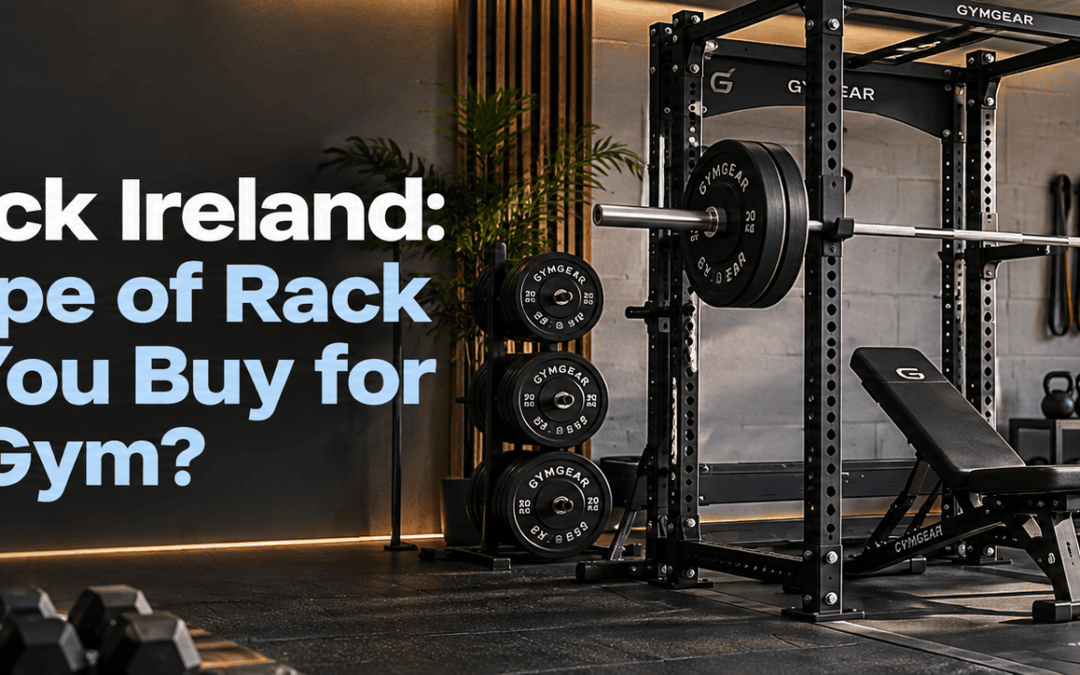
A lot of home gyms start small.
A pair of dumbbells. Maybe a bench. Maybe a kettlebell in the corner. That is usually enough at the beginning, especially if the goal is to get moving again and build a bit of routine.
But there comes a point where bodyweight exercises and dumbbells are not enough anymore. You want to squat properly. You want to bench press safely. You want to lift heavier without guessing where to put the bar. You want a setup that feels more like a real training space.
That is when a gym rack starts to make sense.
A good rack changes the whole feel of a home gym. It gives your training a centre. Instead of moving bits of equipment around the room, the rack becomes the main strength station. Squats, bench press, rack pulls, overhead press, pull-ups, band work and barbell training all start from there.
For anyone building a proper home gym in Ireland, a gym rack is usually one of the biggest upgrades you can make.
The only problem is choosing the right one.
Do you need a power rack? Will a squat rack do the job? How much space do you need? Can it go in a garage? Do you need an Olympic bar as well? What about weight plates, flooring and a bench?
Those are the questions worth answering before you buy.
Why a Gym Rack Becomes the Centre of a Home Gym
A gym rack is not just another piece of strength equipment. It is the frame that allows you to train heavier and with more structure.
Without a rack, barbell training becomes limited very quickly. You can deadlift from the floor, but squats and bench press become awkward or unsafe. You do not want to be lifting a loaded bar from the ground onto your shoulders. You also do not want to bench press at home with no safe way to re-rack the bar.
A rack solves that.
It gives you proper bar height, support, safety options and a stable place to train. You can set the bar where you need it, lift with more confidence and build a training setup that grows with you.
For Irish homes, racks are usually placed in garages, sheds, spare rooms, garden rooms or dedicated home gym areas. You do not need a commercial gym around you. But you do need enough space, a strong floor and the right supporting equipment.
A rack is not something you buy just because it looks good. You buy it because you are ready to train properly.
Power Rack vs Squat Rack: What Is the Difference?
People often use the words gym rack, power rack and squat rack as if they all mean the same thing. They are close, but there are differences.
A squat rack is usually more open. It gives you uprights to hold the bar and is mainly used for squats, overhead press and some bench work. It can be a good choice for people who want a smaller setup or have limited space.
A power rack is usually more enclosed. It has four uprights and feels more like a cage. This gives you more safety and more training options, especially if you are lifting alone at home.
For most serious home gym users, a power rack is the stronger long-term choice. It gives you more confidence when squatting and benching, and it usually works better with safety arms, spotter bars, pull-up bars and other attachments.
A squat rack can still be useful. If your space is tight and your training is fairly simple, it may be enough.
But if you are building a setup for long-term strength training, a power rack is usually the better investment.
Who Should Buy a Power Rack?
A power rack is ideal for anyone who wants to lift heavier at home.
It suits people who want to squat, bench press, overhead press, rack pull, use resistance bands, do pull-ups and build a more complete strength setup. It is also a good choice if you train alone, because the safety features give you more control.
This is the big thing with home training. In a gym, there may be people nearby. At home, you might be training on your own in the garage or garden room. That makes safety more important.
A power rack lets you set the safety bars or spotter arms at the right height. If a lift does not go to plan, you have somewhere for the bar to land. That matters, especially for squats and bench press.
A power rack is also useful if more than one person in the house trains. Different users can adjust the bar height depending on the exercise and their body size.
It is not the smallest option, but it is one of the most complete.
If you want your home gym to feel like a proper strength area, this is usually the rack to look at first.
When Is a Squat Rack Enough?
A squat rack can be enough if your training is more basic and your space is limited.
It is a good option for people who mainly want to squat, press and do some barbell work without building a full cage-style setup. It can also suit users who need something a little more open or easier to fit into a smaller area.
That said, you need to be honest about how you train.
If you are planning to lift heavy alone, a full power rack may make more sense. If you want to bench press safely, make sure the rack setup can support that properly. If you want pull-ups, attachments and more training variety, check whether the squat rack gives you enough options.
A squat rack can work very well for the right person. It is just not always the best choice for someone trying to build a complete home gym around barbell training.
What Space Do You Need for a Gym Rack at Home?
This is where people often get caught.
They measure the rack, but forget about the space around it.
A gym rack needs floor space, ceiling height and room for the barbell. Remember, an Olympic bar extends well beyond the rack. You need space on both sides to load plates safely. You also need enough room in front and behind for movement, bench setup and safe lifting.
For Irish homes, garages are usually the easiest place. A garage often gives better floor strength, more clearance and less worry about noise. Garden rooms and sheds can also work, provided the floor is suitable and there is enough height.
Spare bedrooms are possible in some cases, but you need to think carefully about floor load, ceiling height and how much room you will actually have once the rack, bench, bar and plates are in place.
A rack is not like a pair of dumbbells that can be tucked away after use. Once it is assembled, it becomes part of the room.
Before buying, measure properly. Width, depth, height, barbell clearance, bench space, walking space. All of it.
It is boring, but it saves headaches later.
What Equipment Do You Need with a Gym Rack?
A rack on its own is only part of the setup.
To use it properly, you will usually need an Olympic bar, weight plates, collars, a bench and suitable flooring.
The Olympic bar is the main tool for squats, bench press, deadlifts, rows and overhead press. The weight plates give you progression. The collars keep the plates secure. The bench allows bench press, seated press, incline work and dumbbell exercises.
Flooring is also important. A garage floor might be strong, but you still want protection under the training area. Proper gym flooring helps protect the floor, reduce noise and make the setup feel more stable.
If you are planning a home strength area, think of the rack as the centre. Everything else works around it.
A basic rack setup might include:
A power rack or squat rack
An Olympic bar
Weight plates
Barbell collars
Adjustable or flat bench
Floor protection mats
You do not always need everything on day one, but if you want to train properly, these are the pieces you will probably build towards.
Is a Gym Rack Safe for Home Training?
A gym rack can make home training much safer, but only if it is set up and used properly.
The rack should be stable, placed on a suitable surface and used with the safety supports at the correct height. Do not guess. Set them properly for each exercise.
For squats, the safety bars should be low enough to allow full movement, but high enough to catch the bar if you cannot stand back up.
For bench press, they should be set so the bar cannot come down onto your chest or neck if you fail a rep.
This is especially important if you train alone. Ego lifting at home is a bad idea. Use a weight you can control, set your safety points and build gradually.
A good rack gives you the option to train harder with more confidence. It does not replace common sense.
Can Beginners Use a Gym Rack?
Yes, beginners can use a gym rack, but they should start simple.
You do not need to be an advanced lifter to own a rack. In fact, learning good barbell technique at home can be excellent if you take your time and train sensibly.
Start with lighter weights. Practise the movement. Get used to setting the bar height. Learn how to unrack and re-rack safely. Build confidence before adding more load.
A rack can actually help beginners because it gives structure. The bar starts from the right height. The space is organised. The safety supports are there.
The mistake is thinking a rack is only for very strong people. It is not. It is for people who want to train strength properly.
That said, if you are completely new to strength training, you may also want to start with dumbbells, a bench and lighter barbell work before going heavy.
Progress is the goal. Not rushing.
What Exercises Can You Do with a Gym Rack?
A good gym rack opens up most of the major barbell exercises.
The main ones are squats, bench press, overhead press, rack pulls and barbell rows. If the rack has a pull-up bar, you can also do pull-ups, chin-ups, hanging knee raises and band-assisted work.
With a bench, the rack becomes even more useful. You can bench press, incline press if your bench allows it, seated shoulder press and use the rack for different pressing positions.
You can also use resistance bands on some rack setups, depending on the design. That gives you extra options for warm-ups, mobility work and accessory exercises.
This is why racks are so valuable. They are not one-exercise machines. They support a whole style of training.
For anyone who wants to build strength at home, that matters.
Gym Rack for GAAs/Garage Gyms
A garage is one of the best places to put a gym rack.
You usually have stronger flooring, better ventilation, more room for plates and bars, and less worry about noise compared with upstairs rooms. It also keeps the training space separate from the rest of the house, which can make workouts easier to stick to.
A garage gym does not need to be fancy. A rack, barbell, plates, bench and flooring can be enough to create a very strong setup.
The main thing is to keep the space usable. Do not pack so much equipment into the garage that you cannot move properly. Leave room to load the bar, bench safely and walk around the rack.
In Irish homes, the garage often becomes the most realistic place for serious strength training.
It is not glamorous, but it works.
Gym Rack for Garden Rooms and Sheds
Garden rooms and sheds are becoming popular for home gyms, but they need a bit more planning.
The first question is flooring. A rack, bar, plates and user weight all add load. Make sure the structure can handle it. You do not want to place heavy strength equipment on a weak or unsuitable floor.
Ceiling height also matters. This is especially true if you want overhead press or pull-ups.
Moisture is another thing to think about. Irish weather is not kind to equipment if the room is damp. Keep the space dry, ventilated and suitable for metal equipment.
If the garden room is solid and well set up, it can make a brilliant home gym. But do the practical checks before buying the rack.
Gym Rack for Small Spaces
Not everyone has a large garage or dedicated gym room.
If space is tight, choose carefully. You may need a more compact rack, a half rack, or a squat rack rather than a full power cage. The right choice depends on the exercises you actually want to do.
Do not buy the biggest rack possible just because it looks impressive. Buy the rack that fits your training and your room.
Also think about plate storage. Plates left around the floor take up space quickly. A tidy setup is easier to use and safer to move around.
In a small home gym, every piece of equipment has to earn its place.
A rack can still work, but planning matters.
What Makes a Good Gym Rack?
A good gym rack should feel stable, strong and practical.
The frame should not feel light or shaky. The bar supports should adjust easily. The safety supports should be reliable. The rack should suit the exercises you want to do.
Height is important. Width is important. Maximum load capacity is important. But day-to-day use matters too.
Can you adjust it without hassle?
Can you bench inside or from the rack safely?
Can you load plates comfortably?
Does it fit your bar?
Does it suit your ceiling height?
Will it still be useful as you get stronger?
A good rack should not feel like something you will outgrow quickly.
It should give you room to progress.
Premier Strength Power Rack for Home Training
The Premier Strength Power Rack is a strong option for anyone looking to build a proper home strength setup.
It suits users who want to squat, bench press, press overhead and train heavier with more structure. For home gyms, garage gyms and serious strength areas, a power rack like this gives you a safer and more organised way to train.
It also works well as the centre of a full strength setup. Pair it with an Olympic bar, weight plates, collars, bench and flooring, and you have the foundation for proper barbell training at home.
For customers moving beyond dumbbells and basic workouts, a power rack is often the piece that changes everything. It gives you the confidence to train heavier and the flexibility to build a more complete programme.
If you are looking for a gym rack that can support long-term home strength training, the Premier Strength Power Rack is a strong place to start.
Should You Buy a Rack Before Dumbbells?
This depends on your level.
If you are completely new to training, dumbbells may be the easier first purchase. They are simple, compact and let you learn basic movements without needing a full strength station.
But if you already know you want to squat, bench press and train with a barbell, a rack becomes more important.
A rack is not a replacement for dumbbells. They do different jobs. In a good home gym, both are useful.
Dumbbells give you flexibility and accessory work. A rack gives you structure and heavier barbell training.
If your budget allows, build the setup in stages. Start with the piece you will use most, then add the rest over time.
Gym Rack and Olympic Bar: The Core Home Strength Setup
A rack without a bar is not much use.
If you are buying a gym rack, you should also be thinking about an Olympic bar and weight plates. That combination is the core of most strength setups.
With a rack, bar and plates, you can squat, bench press, deadlift, row and press. Add a bench and you have even more options.
This is where a home gym starts to become serious. You are no longer just doing random workouts. You have the equipment to follow a proper strength plan and progress over time.
If you are planning to build around barbell training, do not treat the rack as a standalone purchase. Think of it as part of a system.
Rack. Bar. Plates. Bench. Flooring.
That is the foundation.
Is a Gym Rack Worth It?
For the right person, absolutely.
A gym rack is worth it if you want to train strength properly at home. It gives you safety, structure and more exercise options. It also makes your home gym feel more permanent and more useful.
It may not be necessary if you only want light workouts, cardio or basic dumbbell training. But if your goal is strength, muscle, barbell training or long-term progression, a rack is one of the best investments you can make.
The main thing is to buy for your real training.
Not the training you imagine doing once a year.
The training you will actually do on a normal week.
If squats, bench press, overhead press and barbell work are part of that, then a gym rack makes sense.
Where to Buy a Gym Rack in Ireland
If you are looking for a gym rack in Ireland, Gymgear.ie offers strength equipment for home gyms, garage gyms, personal training studios and commercial-style training spaces.
A good rack gives you the base for proper strength training. Add an Olympic bar, weight plates, collars, bench and flooring, and you can build a serious setup without needing to leave home.
For smaller spaces, a compact rack or squat rack may be enough. For long-term barbell training, a power rack is usually the better choice.
The best home gym rack is not always the biggest one.
It is the one that fits your space, suits your training and gives you the confidence to lift safely.
Start with the rack that matches how you actually train. Build the rest around it. That is how a home gym becomes something you use, not just something that looks good in the garage.
